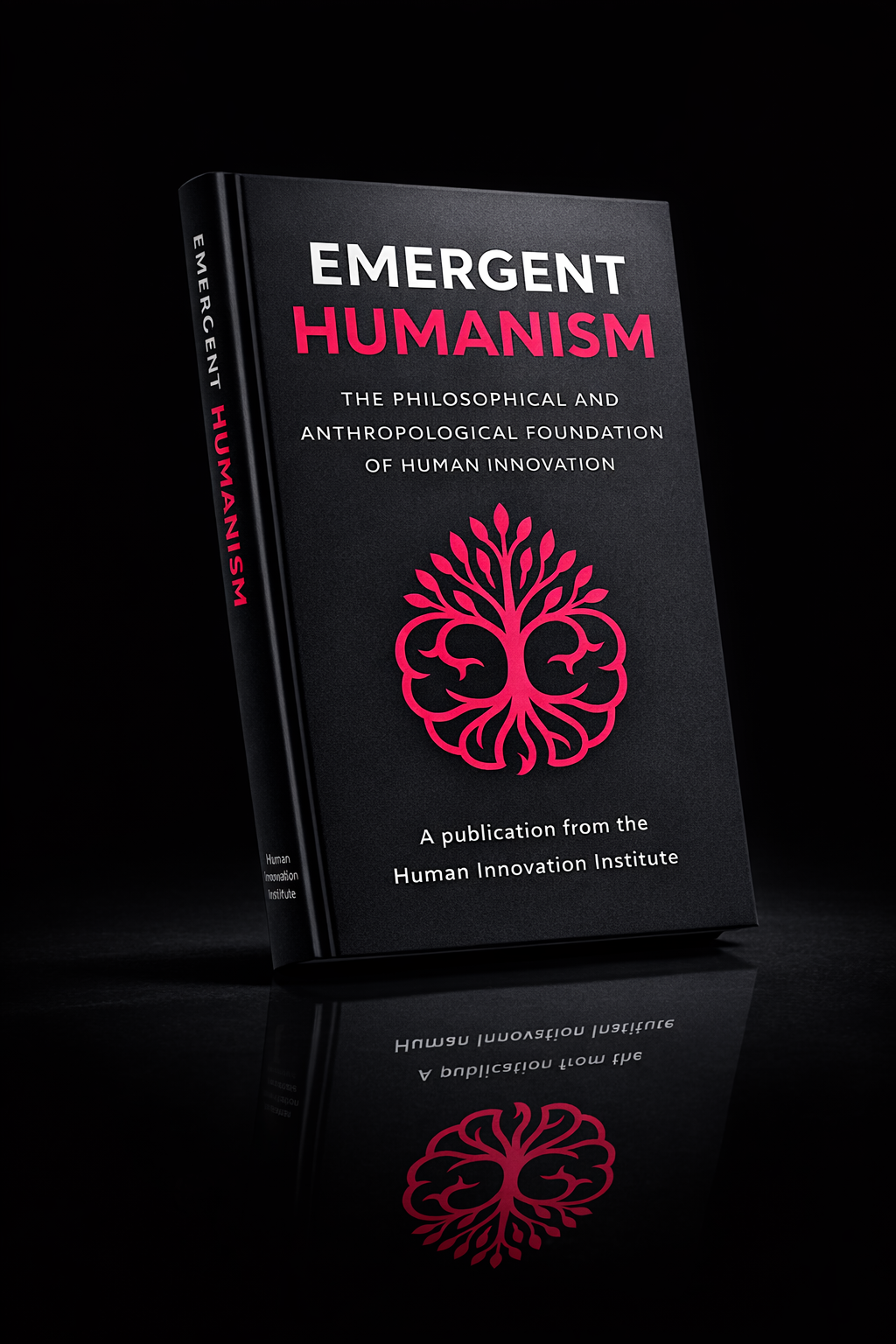
EMERGENT HUMANISM
Emergent Humanism is an effort to articulate a philosophical foundation for human life in an environment of permanent transition. It starts from the acceptance that inherited humanisms were formed under different assumptions: greater institutional continuity, more stable cultural frameworks, and slower rates of change. Those conditions have weakened. What is required now is a renewed understanding of what human dignity, agency, and development must look like in an age defined by uncertainty, complexity, and transformation.
At its core, this work argues that the human being is adaptive, developmental, meaning-making, and capable of transformation. In this view, agency matters. Self-authorship matters. Discernment matters. The capacity to remain grounded while navigating narrative saturation, fractured authority, and technological upheaval matters. These are not secondary concerns. They are becoming central conditions for living well and participating wisely in the world that is emerging.
This publication also helps clarify the relationship between Emergent Humanism and the broader work of the Human Innovation Institute. If Human Innovation is the practical discipline concerned with how individuals, organizations, and societies develop the capabilities to adapt and create under pressure, then Emergent Humanism is the philosophical grounding that helps explain why that work matters. It provides the worldview beneath the methods. It offers a deeper orientation beneath the tools. It names the human stakes beneath the institutional, technological, and societal transitions now underway.